Introduction
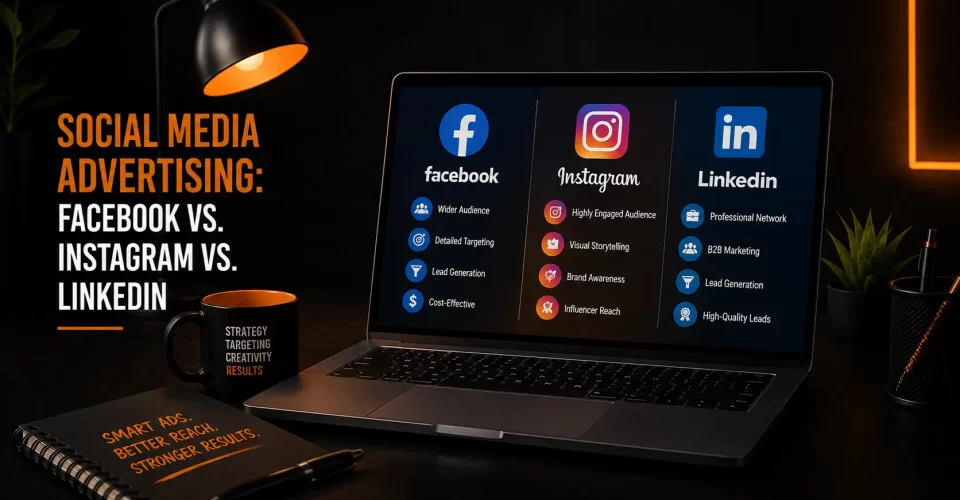
Social media advertising has become an indispensable tool for businesses looking to reach their target audiences. Among the various platforms available, Facebook, Instagram, and LinkedIn stand out due to their unique user bases and advertising capabilities. Understanding the strengths and weaknesses of each platform can help businesses create effective advertising strategies tailored to their specific goals and audiences. In this blog, we will delve into the specifics of advertising on Facebook, Instagram, and LinkedIn, comparing their features, audiences, and best practices to help you make an informed decision for your business.
1. Facebook Advertising
Audience and Demographics
Facebook is one of the largest social media platforms globally, with over 2.8 billion monthly active users as of 2024. Its vast user base spans various age groups, geographical locations, and interests, making it a versatile platform for advertisers.
- Age: Facebook’s user base includes a broad age range, but it is particularly popular among users aged 25-54.
- Gender: The platform has a fairly balanced gender distribution.
- Geography: Facebook has a global reach, with significant user bases in North America, Europe, Asia, and other regions.
Advertising Features
Facebook offers a variety of ad formats and targeting options that cater to different advertising objectives:
- Ad Formats: Photo ads, video ads, carousel ads, slideshow ads, collection ads, and more.
- Targeting Options: Demographic targeting (age, gender, location), interest-based targeting, behavior-based targeting, custom audiences, and lookalike audiences.
- Ad Placement: Ads can be placed in the news feed, right column, stories, in-stream videos, marketplace, and more.
Best Practices for Facebook Advertising
- Define Clear Objectives: Whether your goal is brand awareness, lead generation, or sales, clearly define your objectives before creating your ad campaigns.
- Leverage Custom Audiences: Use custom audiences to target users who have already interacted with your business, such as website visitors or email subscribers.
- Utilize Lookalike Audiences: Expand your reach by targeting lookalike audiences, which are users similar to your existing customers.
- A/B Testing: Test different ad creatives, headlines, and targeting options to determine what works best for your audience.
- Engaging Content: Create visually appealing and engaging content that captures the attention of users as they scroll through their feeds.
Case Study
A clothing retailer looking to increase online sales utilized Facebook’s carousel ad format to showcase multiple products in a single ad. By targeting users who had visited their website but did not make a purchase (retargeting), the retailer saw a 25% increase in conversions and a 15% decrease in cost per acquisition (CPA).
2. Instagram Advertising
Audience and Demographics
Instagram, owned by Facebook, has over 1 billion monthly active users, making it a powerful platform for visual storytelling and engagement. It is particularly popular among younger audiences.
- Age: Instagram is favored by users aged 18-34, making it ideal for brands targeting younger demographics.
- Gender: The platform tends to have a slightly higher female user base.
- Geography: Instagram has a strong presence in the United States, Europe, and increasingly in other regions worldwide.
Advertising Features
Instagram offers a range of visually-focused ad formats and targeting options, leveraging Facebook’s powerful ad targeting capabilities:
- Ad Formats: Photo ads, video ads, carousel ads, story ads, collection ads, and explore ads.
- Targeting Options: Similar to Facebook, Instagram allows demographic targeting, interest-based targeting, behavior-based targeting, custom audiences, and lookalike audiences.
- Ad Placement: Ads can appear in the feed, stories, explore page, and IGTV.
Best Practices for Instagram Advertising
- High-Quality Visuals: Use high-quality images and videos that are visually appealing and consistent with your brand’s aesthetic.
- Story Ads: Take advantage of Instagram Stories, which are highly engaging and can include interactive elements like polls and swipe-up links.
- Influencer Partnerships: Collaborate with influencers who align with your brand to reach a larger and more engaged audience.
- User-Generated Content: Encourage your customers to create content featuring your products and share it on your brand’s profile.
- Hashtags and Location Tags: Use relevant hashtags and location tags to increase the discoverability of your ads.
Case Study
A fitness brand aiming to increase app downloads used Instagram story ads to showcase their app’s features and benefits. By including a clear call-to-action (CTA) and a swipe-up link, they achieved a 30% increase in app downloads and a significant boost in user engagement.
3. LinkedIn Advertising
Audience and Demographics
LinkedIn is the go-to platform for professional networking, with over 740 million users. It is particularly effective for B2B marketing and reaching decision-makers.
- Age: LinkedIn’s user base primarily consists of professionals aged 25-54.
- Gender: The platform has a balanced gender distribution.
- Geography: LinkedIn has a strong presence in the United States, Europe, and other regions with a significant professional workforce.
Advertising Features
LinkedIn offers several ad formats and targeting options that cater specifically to professional audiences:
- Ad Formats: Sponsored content, sponsored InMail, text ads, dynamic ads, and video ads.
- Targeting Options: Professional demographics (job title, company, industry, seniority), location, and more.
- Ad Placement: Ads can appear in the feed, message inbox (sponsored InMail), and the sidebar.
Best Practices for LinkedIn Advertising
- Professional Tone: Craft ads with a professional tone that resonates with LinkedIn’s business-focused audience.
- Precise Targeting: Utilize LinkedIn’s detailed targeting options to reach specific professional segments, such as decision-makers in a particular industry.
- Thought Leadership Content: Promote content that establishes your brand as a thought leader, such as whitepapers, case studies, and industry reports.
- Lead Generation Forms: Use LinkedIn’s lead gen forms to collect valuable information from prospects without requiring them to leave the platform.
- Employee Advocacy: Encourage your employees to share your content, expanding its reach and credibility through their professional networks.
Case Study
A software company targeting HR professionals used LinkedIn’s sponsored content to promote a whitepaper on industry trends. By targeting HR managers and directors in companies with over 500 employees, they achieved a 20% increase in whitepaper downloads and generated high-quality leads for their sales team.
4. Integration with E-Commerce Platforms
Facebook seamlessly integrates with various e-commerce platforms, making it easier for businesses to promote their products directly on the platform.
- Facebook Shops: Create a customizable online storefront on Facebook to showcase your products. Customers can browse, save, share, and purchase products without leaving the app.
- Dynamic Ads: Automatically promote relevant products to users who have expressed interest on your website or app. These ads dynamically update based on the user’s behavior and preferences.
- Shoppable Posts: Tag products in your posts to make it easy for users to shop directly from their newsfeed.
Instagram is particularly effective for businesses in the fashion, beauty, and lifestyle industries due to its strong visual focus.
- Instagram Shopping: Set up an Instagram shop to allow users to explore and purchase products directly from your profile, posts, stories, and explore tab.
- Product Tags: Tag products in your photos and videos to provide users with detailed information and a direct link to purchase.
- Checkout on Instagram: Streamline the purchase process by allowing users to buy products directly within the Instagram app, available in select markets.
LinkedIn, while not primarily an e-commerce platform, offers unique opportunities for B2B transactions and lead generation.
- Lead Gen Forms: Collect leads directly through LinkedIn ads without requiring users to leave the platform. This is particularly useful for B2B companies offering services, software, or high-value products.
- Showcase Pages: Create dedicated pages for different products or services, allowing you to highlight specific offerings and tailor content to different audience segments.
- Content Marketing: Promote whitepapers, case studies, and e-books to capture leads and nurture potential customers through the sales funnel.
5. Community Building and Engagement
Facebook is excellent for building a community around your brand and engaging with your audience on a deeper level.
- Facebook Groups: Create groups to foster a sense of community and facilitate discussions among your customers and followers. Groups are great for providing support, sharing updates, and gathering feedback.
- Live Streaming: Use Facebook Live to host Q&A sessions, product launches, and behind-the-scenes content. Live videos can drive significant engagement and allow real-time interaction with your audience.
- Messenger Marketing: Utilize Facebook Messenger to offer personalized customer service, answer queries, and send updates. Messenger bots can automate responses and enhance user experience.
Instagram’s features are designed to foster high levels of engagement and build a loyal community.
- Stories and Highlights: Use Instagram Stories to share daily updates, conduct polls, and showcase user-generated content. Highlights allow you to keep important stories accessible on your profile.
- IGTV and Reels: Create longer videos and short, engaging clips to connect with your audience. These formats are perfect for tutorials, product demos, and creative content.
- Direct Messaging: Engage with your followers through direct messages. Personalized responses and timely interactions can enhance customer loyalty and satisfaction.
LinkedIn is ideal for professional networking and community building within your industry.
- LinkedIn Groups: Participate in and create groups relevant to your industry to share insights, discuss trends, and connect with professionals. Groups help establish your brand as an industry leader.
- Content Sharing: Regularly share valuable content, including articles, industry news, and thought leadership pieces, to engage your professional network and encourage discussions.
- Employee Advocacy: Encourage your employees to share company content and participate in industry conversations. This amplifies your reach and adds credibility to your brand.
6. Analyzing and Measuring Success
Facebook provides robust analytics tools to help you measure the success of your ad campaigns and optimize for better performance.
- Facebook Insights: Access detailed metrics on page performance, audience demographics, and post engagement. Use this data to refine your content strategy and target audience.
- Ads Manager: Track the performance of your ad campaigns, including impressions, clicks, conversions, and ROI. A/B testing features help you identify the most effective ad creatives and targeting options.
- Pixel Integration: Implement the Facebook Pixel on your website to track user actions, measure the effectiveness of your ads, and retarget users who have interacted with your site.
Instagram’s analytics tools help you understand your audience and optimize your content for maximum engagement.
- Instagram Insights: Access metrics on follower growth, post reach, engagement, and demographic information. Use these insights to tailor your content and posting schedule.
- Stories Analytics: Track the performance of your stories, including views, interactions, and completion rates. Optimize your story content based on these metrics to increase engagement.
- Ad Analytics: Monitor the performance of your Instagram ads, including impressions, clicks, and conversions. Adjust your ad strategy based on the data to improve results.
LinkedIn offers advanced analytics tailored for B2B marketing and professional networking.
- LinkedIn Analytics: Track metrics related to page views, follower growth, and post engagement. Analyze the demographics and industries of your audience to refine your targeting.
- Campaign Manager: Monitor the performance of your LinkedIn ad campaigns, including click-through rates, conversions, and lead generation metrics. Use this data to optimize your ad spend and targeting.
- Conversion Tracking: Implement LinkedIn’s conversion tracking to measure the ROI of your ad campaigns and understand how users interact with your site after clicking on your ads.
Comparing the Platforms
Audience Reach
- Facebook: Offers the largest and most diverse user base, suitable for both B2C and B2B marketing.
- Instagram: Ideal for brands targeting younger demographics and focusing on visually-driven products.
- LinkedIn: Best for B2B marketing and reaching professionals, especially decision-makers and industry leaders.
Ad Formats
- Facebook: Provides a wide range of ad formats and placements, offering flexibility for various marketing objectives.
- Instagram: Focuses on visually appealing ad formats, including stories and explore ads, which are highly engaging.
- LinkedIn: Specializes in professional ad formats like sponsored content and InMail, tailored for business-focused campaigns.
Targeting Options
- Facebook: Extensive targeting options, including demographics, interests, behaviors, custom audiences, and lookalike audiences.
- Instagram: Leverages Facebook’s targeting capabilities, making it equally robust in terms of audience segmentation.
- LinkedIn: Offers unique professional targeting options based on job titles, industries, and company attributes, ideal for precise B2B targeting.
Cost and ROI
- Facebook: Generally offers competitive CPC (cost per click) and CPM (cost per thousand impressions), but costs can vary based on targeting and competition.
- Instagram: Typically has higher engagement rates, which can lead to better ROI despite potentially higher CPC.
- LinkedIn:Often has higher CPC and CPM due to its professional audience, but the quality of leads and B2B focus can result in a strong ROI for relevant campaigns.
Conclusion
Choosing the right social media platform for your advertising efforts depends on various factors, including your business goals, target audience, and the nature of your products or services.
- Facebook offers extensive reach, diverse ad formats, and robust targeting options, making it suitable for a wide range of objectives and audiences.
- Instagram excels in visual storytelling and engaging younger audiences, with powerful e-commerce integrations and high engagement rates.
- LinkedIn provides unparalleled opportunities for B2B marketing, professional networking, and lead generation with precise targeting and professional-focused content.
By understanding the unique strengths and best practices of each platform, you can create effective advertising campaigns that maximize your reach, engagement, and conversions. Continuously analyze your performance, experiment with different strategies, and adapt to the evolving digital landscape to achieve the best outcomes for your business.